







1. Zambia's Mining Cost Dilemma: Balancing Resource Dividends and Operational Pressures
As Africa's second-largest copper producer, Zambia boasts world-famous mineral-rich regions like the Copperbelt Province, with mining contributing 25% of the country's GDP and 70% of export earnings. However, local mining enterprises, especially small and medium-sized copper mines and quarries, are facing severe cost challenges: volatile international copper prices, 30% rising energy costs, increasing labor costs year by year, coupled with high procurement and maintenance expenses for imported equipment, resulting in processing costs of up to $85 per ton of ore in some small mines, far exceeding the industry average.
Traditional solutions often fall into the "high-investment trap": European and American brand crushers require initial investment of $3-5 million, with spare parts replacement costs accounting for 20-25% of the original equipment value annually; while low-end equipment, though cheaper, causes downtime losses of 15-20% of daily production capacity due to high failure rates. This dilemma has forced Zambian mining companies to rethink core criteria for equipment procurement — shifting from purely pursuing brands to comprehensive evaluation oriented by return on investment (ROI).
2. The "Value Equation" of Chinese Crushers: Precise Balance Between Performance and Cost
China's cost-effective crushers provide new options for Zambia's mining industry by redefining the concept of "value". This "value" is reflected in the precise balance of three dimensions:
Initial investment optimization — With the same processing capacity, Chinese crushers cost 40-50% less than European and American brands while maintaining 85-90% of performance indicators. Take a jaw crusher with 200 tons/hour capacity as an example: Chinese equipment investment is about $1.2 million, while similar European and American products cost $2.2-2.5 million, directly saving mining enterprises nearly 50% of initial funds and significantly lowering investment thresholds.
Life-cycle cost control — Through modular design reducing maintenance complexity, annual maintenance costs of Chinese equipment account for only 8-12% of original value. Key wearing parts such as jaw plates use high-chromium cast iron, with service life reaching 800-1000 hours, 30% longer than similar products; meanwhile, standardized parts system reduces spare parts prices by 40-60%, greatly alleviating continuous investment pressure.
Uncompromised performance — Equipped with intelligent control systems, Chinese crushers can automatically optimize crushing parameters, maintaining product particle size qualification rate above 95%; their dust emission control meets international standards, complying with Zambian environmental regulations; some models are designed with wide voltage adaptation systems (380V±15%) for African power grids, reducing downtime caused by unstable electricity.
3. Transformation in Data: Actual Cost Improvements for Zambian Mining Enterprises
The application of China's cost-effective crushers in Zambia has verified their ability to reduce unit costs through specific data. A case of a medium-sized copper mine near Lusaka is particularly representative:
- Before equipment replacement (using European and American second-hand equipment): copper ore processing cost was $78 per ton, overall equipment efficiency (OEE) was 62%
- After replacing with Chinese CS240 cone crusher: processing cost dropped to $52 per ton, a 33% reduction; OEE increased to 85%
- Key improvements: crushing energy consumption reduced from 2.1kWh/ton to 1.5kWh/ton; weekly breakdown downtime decreased from 8 hours to 2.5 hours; monthly consumption cost of wearing parts reduced from $12,000 to $5,000
- Investment payback period: only 8.5 months, far below the industry average of 18-24 months
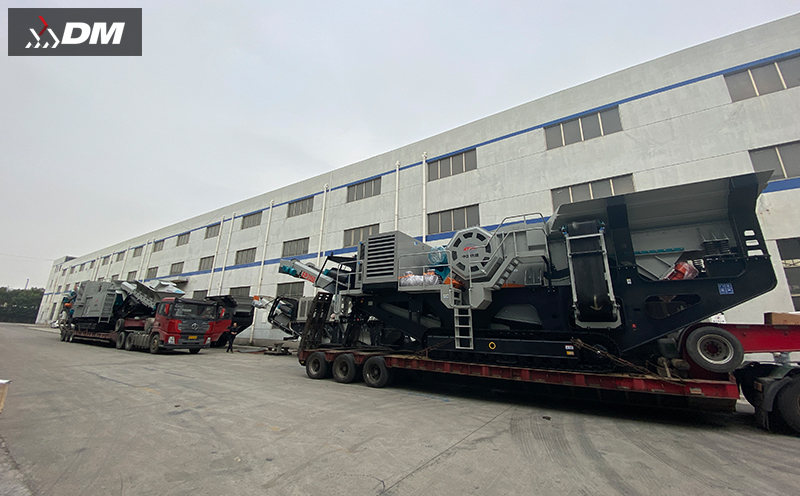
Similar results have been achieved in quarries. After introducing Chinese mobile crushing plants, a building stone producer in Copperbelt Province not only reduced production cost from $12 to $8.5 per ton of stone, but also undertook more short-term projects through rapid relocation capability, increasing equipment utilization by 60% and annual net profit by $450,000.
4. Beyond Equipment: Building Support Systems Suitable for Zambia
Chinese manufacturers understand that cost-effectiveness is not only reflected in equipment itself but also requires sound localized support. To this end, a regional service center has been established in Lusaka, stocking over 150 types of common spare parts, ensuring 90% of maintenance needs can be responded to within 48 hours; cooperating with local training institutions to carry out operation and maintenance training, having trained over 200 technicians for Zambian mining enterprises; launching a "trade-in" program to address funding pressure for equipment renewal.
This "equipment + service" model is changing the market pattern — in the past three years, the market share of Chinese brands among newly added crushers in Zambia's mining industry has grown from 18% to 42%, with 85% of customers indicating they would choose Chinese equipment again, mainly due to "clear and predictable return on investment".
5. Conclusion: A New Value-Oriented Path for Mining Development
Against the backdrop of intensified global mining competition, the survival of Zambian copper mines and quarries lies not in blindly pursuing high-end equipment, but in establishing an operational thinking centered on "cost per ton". By precisely balancing performance and cost, China's cost-effective crushers not only directly reduce unit processing costs but, more importantly, shorten investment payback periods, improve capital turnover efficiency, and provide enterprises with stronger risk resistance capabilities in price fluctuation cycles.
This ROI-centered cooperation model is becoming a new highlight in China-Zambia mining cooperation. When equipment procurement changes from "brand selection" to "value calculation", and cost control transforms from "passive reduction" to "system optimization", Zambia's mining industry will build more sustainable competitiveness based on its resource advantages — this is what China's cost-effective crushers bring, not just equipment, but an innovation in operational philosophy.
If you would like to get help immediately, you can also fill your requirements on the following form, we will contact you on the right time.


Get In Touch